Reading time: 4 MINUTES
When thinking about kitchen design, appliance choices play a bigger role than many people expect. Beyond individual features, how appliances are integrated into the space can influence layout, flow, and the overall visual clarity of the kitchen.
Integrated kitchen appliances are designed to sit within cabinetry, supporting a more cohesive and considered kitchen design. In this article, we explore a range of integrated kitchen appliance ideas, looking at how thoughtful placement and design choices can help create kitchens that feel calm, functional, and visually aligned across a variety of layouts and styles.
Why integrated appliances suit modern kitchen design
Integrated appliances are often chosen for how they work within the overall kitchen design, rather than as individual statement pieces. When planned as part of the layout, they can support both visual clarity and day-to-day use.
It builds a unified kitchen
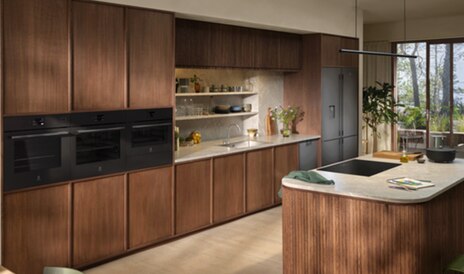
Integrated appliances sit within the cabinetry rather than standing apart from it. This helps the kitchen read as a single, cohesive space, where appliances feel like part of the architecture instead of individual additions.
It allows for clear surfaces and uninterrupted lines
By removing exposed sides and visible gaps, integrated appliances allow benchtops, cabinetry lines, and finishes to run cleanly across the kitchen. This creates a stronger sense of order and makes the space feel calmer and easier to take in at a glance.
It's a smarter use of available space
Planning appliances into the cabinetry helps make better use of the space that’s already there. This approach supports more efficient layouts and reduces the need for compromises later, particularly in kitchens where space needs to work hard.
Appliances fit the kitchen’s design instead of competing with it
Integrated appliances can be selected and positioned alongside cabinetry, materials, and finishes, allowing them to support the overall design rather than draw attention to themselves. The result is a kitchen where nothing feels visually out of place.
Their placement supports everyday use
Because integrated appliances are planned early, they can be positioned where they make the most sense for how the kitchen is used; whether that’s ovens placed at a comfortable height or appliances aligned to support natural movement through the space.
3 Things to consider when planning an integrated kitchen
Choosing integrated appliances works best when they are planned alongside the kitchen layout from the start. Beyond appearance, a few practical considerations can help ensure the design supports how the space is used over time.
- Work with the existing layout: Let the size, proportions, and structure of the kitchen guide appliance placement. Integrated appliances should support natural movement through the space and fit comfortably within cabinetry without creating pinch points or overcrowding.
- Think about how the kitchen is used day to day: Consider how often different appliances are used and how they relate to one another. Placement should support common tasks, such as preparing, cooking, and cleaning, without unnecessary steps or awkward reach.
- Plan for features that support long-term use: Rather than focusing on the latest technology, look for features that genuinely support how the kitchen will be used over time. Clear controls, intuitive operation, and compatibility with the overall layout are often more important than added complexity.
Integrated kitchen appliance ideas to guide your design
Integrated appliances can shape how a kitchen looks, feels, and functions. Rather than acting as focal points, they work best when planned as part of the overall layout.
Below are five design-led ideas that show how integrated appliances can support different kitchen concepts and spatial needs.
1. Maximise efficiency and style in compact kitchens
In compact kitchens, every design decision matters. Integrated appliances help reduce visual noise and allow storage, work surfaces, and appliances to be planned together, creating a space that feels organised and intentional rather than constrained.
What this approach supports:
- More efficient use of available space By fitting appliances within cabinetry, space is allocated more precisely, helping avoid awkward gaps or underused areas.
- Clearer visual structure When appliances don’t stand apart from cabinetry, the kitchen feels more open and easier to navigate visually, even in smaller layouts.
- Better balance between function and form Integrated solutions allow practical requirements to be met without adding visual bulk, supporting kitchens that feel both functional and well resolved.
2. Enhance your kitchen’s functionality and aesthetics with cabinetry
When cabinetry forms the backbone of the kitchen design, appliances can be planned to sit quietly within it. This approach places emphasis on proportion, alignment, and repetition, allowing the kitchen to feel cohesive rather than assembled over time.
What this approach supports:
- Stronger architectural definition Grouping appliances within full-height or continuous cabinetry helps establish rhythm and structure across the kitchen.
- Cleaner transitions between elements Appliances that align with cabinet lines and finishes reduce visual breaks and support a more unified composition.
- A design that feels intentional When appliances are planned as part of the cabinetry from the start, the kitchen reads as a complete design rather than a series of additions.
3. Handleless kitchens for a seamless, modern look
Handleless kitchens rely on uninterrupted lines and subtle detailing. Integrated appliances naturally support this style by removing visual interruptions and allowing surfaces and materials to remain the focus.
What this approach supports:
- Unbroken horizontal and vertical lines Without handles or exposed appliance edges, the kitchen maintains a strong sense of continuity across cabinetry runs.
- A calmer visual environment Fewer details competing for attention helps the space feel composed and easier to read at a glance.
- Greater emphasis on materials and light With appliances receding visually, texture, finish, and natural light become the defining elements of the space.
4. Integrated kitchen islands: The heart of multifunctional kitchens
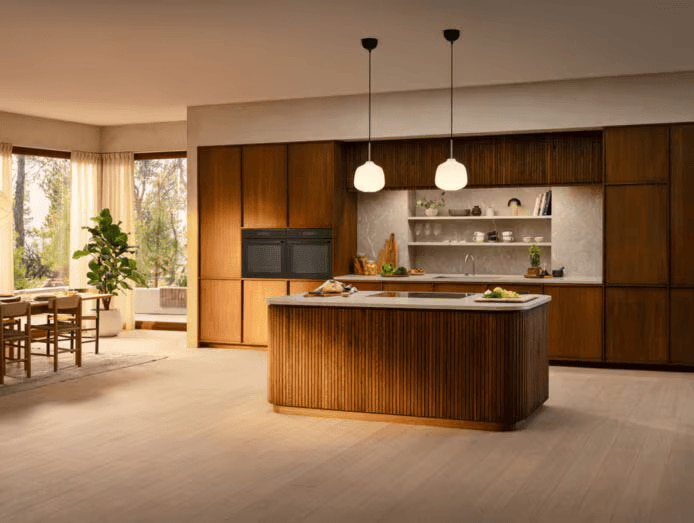
Kitchen islands often act as functional anchors within the space. Integrating appliances into the island allows activity to be distributed more evenly across the kitchen, while keeping the overall design visually balanced.
What this approach supports:
- Clear zoning within the kitchen Integrated appliances help define preparation, cooking, or cleaning zones without the need for additional structures.
- A more cohesive central feature When appliances are aligned with the island’s materials and proportions, the island reads as a single, unified element.
- Improved flow around the space By placing key functions within the island, movement through the kitchen can feel more natural and less interrupted.
Integrated appliances within the Electrolux kitchen approach
Electrolux offers a range of integrated kitchen appliances designed to sit within cabinetry and support cohesive kitchen layouts. The appliances are designed to integrate naturally within the kitchen layout, working together to create a balanced and functional space.
Across categories such as ovens, cooktops, dishwashers, and rangehoods, integrated appliances are developed to align with modern kitchen planning, where layout, proportion, and visual clarity are prioritised. The design language reflects Scandinavian principles of simplicity and balance, allowing appliances to support the space rather than compete for attention.
Explore our range of integrated kitchen appliances designed to work seamlessly within modern kitchen layouts.
Frequently asked questions on integrated kitchen designs
-
How can integrated appliances support smaller kitchens?
By sitting within cabinetry and aligning with surrounding surfaces, integrated appliances can help reduce visual breaks and support clearer layouts, which can be especially helpful in smaller kitchens.
-
Are integrated appliances different to use compared to freestanding ones?
No. Integrated appliances function in the same way as freestanding models. The difference lies in how they are installed and how they sit within the kitchen layout.
-
Can integrated appliances work with different kitchen styles?
Yes. Integrated appliances are often chosen because they can adapt to a wide range of kitchen designs, from minimalist to more traditional, depending on the cabinetry, materials, and finishes used.
